

Joint Hypermobility and Sleep: Why EDS Bodies Need Different Support
Quick answer: Hypermobile joints lack the collagen strength to stay stable once muscles relax during sleep, leading to overnight joint subluxation, pain, and fragmented rest. Research shows up to 97.4% of people with hypermobile Ehlers-Danlos Syndrome (hEDS) say pain interferes with their sleep. Contoured, adjustable support, like specialist pillows and wedges, can reduce joint strain and improve sleep quality for hypermobile bodies.
If you live with Ehlers-Danlos Syndrome (EDS), hypermobility spectrum disorder (HSD), or general joint laxity, you'll know that bedtime rarely means "lights off, time for sleep." Instead, it can mean shifting pillows for the fifth time, bracing a knee that won't stay put, or waking at 3am with a shoulder that's slipped out of place. This isn't in your head, and it isn't down to a "bad mattress" in the way most people mean it. It's biomechanics.
This guide explains why hypermobile joints struggle to settle overnight, what the research says about joint pain sleeping, and how the right kind of contouring, pressure-distributing support can genuinely change your nights.
Why Lax Joints Struggle to Settle Overnight
EDS and hypermobility conditions stem from genetic variations affecting collagen, the protein that acts as the body's structural "mortar" for joints, tendons, and skin. In hypermobile bodies, ligaments behave more like stretched-out rubber bands than stiff cables. According to the Ehlers-Danlos Society, this joint instability leads to subluxations, dislocations, sprains, and both acute and chronic pain.
During the day, muscles compensate for this laxity by constantly micro-stabilising joints. At night, however, muscles relax as part of natural sleep physiology, which removes that protective bracing. Without it, joints can shift, hyperextend, or partially dislocate, particularly in the neck, shoulders, hips, and knees.
This is why so many people with hypermobile joints report waking up in an entirely different, often more painful, position than the one they fell asleep in.
The Hidden Cost of Constant Micro-Stabilising
Even when a joint doesn't fully sublux overnight, the ongoing effort of micro-stabilising takes a toll. Muscles that should be resting are instead working through the night, which contributes to the profound, unrefreshing fatigue so commonly reported alongside EDS.
The data paints a clear picture of just how disruptive this is:
- 92.2% of adults with hEDS report their sleep is not restful (Archives of Physical Medicine and Rehabilitation, 2022 survey of 768 adults)
- 97.4% say pain interferes with their sleep, with 37.75% affected daily
- 66.4% get less than the recommended 7 hours of sleep per night
- 90% report not feeling refreshed on waking, and 70% say they're woken by discomfort (Jeannie Di Bon, hEDS/HSD sleep study)
- Sleep apnoea occurs 5.3 times more often in people with EDS than in matched controls
This bidirectional cycle, where pain disrupts sleep, and poor sleep amplifies pain sensitivity, is well documented in EDS research, and it's precisely why addressing sleep quality isn't a "nice to have." It's central to symptom management.
What Do the Statistics Say About Sleep and EDS?
To put the scale of the problem into perspective, here's a snapshot of the research findings:
|
Sleep Issue |
Reported Prevalence |
Source |
|---|---|---|
|
Sleep not restful |
92.2% |
|
|
Pain interferes with sleep |
97.4% |
|
|
Less than 7 hours' sleep/night |
66.4%-65.3% |
|
|
Not feeling refreshed on waking |
90% |
|
|
Woken by discomfort |
70% |
|
|
Used positioning, pillows or wedges as an intervention |
20.1% |
|
|
Sleep apnoea prevalence (vs. controls) |
5.3x higher |
Only around 1 in 5 people with hEDS currently use positioning aids such as pillows or wedges to manage their sleep, despite the clear link between joint support and reduced pain. That's a significant gap, and an opportunity.
See also - Mastering the Art of a Restful Night's Sleep: How to Sleep Better in 8 Easy Steps
Why Standard Pillows and Mattresses Fall Short for Hypermobile Joints
Most off-the-shelf pillows are designed with an "average" sleeper in mind: someone whose joints stay roughly where they're put. That assumption doesn't hold for hypermobile bodies.
A standard pillow typically:
- Fails to contour closely enough to prevent a hip, knee, or shoulder from rolling out of alignment
- Compresses unevenly over the night, losing the support it offered at bedtime
- Offers a single firmness or shape, when hypermobile bodies often need different support at the neck, knees, and lower back simultaneously
The NHS advises that reducing joint pain sleeping often comes down to using a body pillow or a firmer mattress with extra cushioning, and sleeping on your side where possible. But for many with EDS, one pillow isn't enough. Multiple, targeted supports are often needed to stabilise several vulnerable joints at once.

Building a Supportive, Contoured Sleep Setup
The good news is that thoughtful, EDS pillow support doesn't need to be complicated. It's about matching the right shape and firmness to the joint that needs stabilising.
For neck and shoulder subluxation risk: Our Putnam Pillow is an orthopaedic foam design that's been recommended by chiropractors for over 38 years. It's built to align the spine and reduce the numbness and discomfort that comes from an unsupported neck shifting overnight.
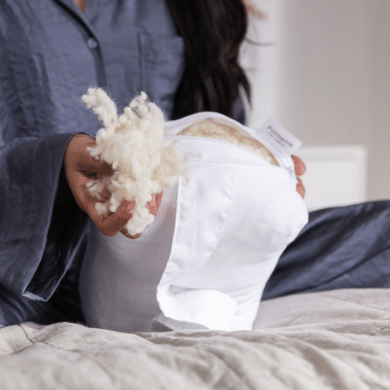
For adjustable, conforming support: The Organic Buckwheat Hull Pillow moulds to the exact contours of the neck and shoulders, and hull volume can be added or removed to fine-tune firmness, useful for joints that need a different level of support night to night.
For hip, knee, and pelvic alignment: A pillow placed between the knees helps prevent the top leg from dropping and twisting the pelvis, a common trigger for overnight hip pain. Putnams' Legs & Feet Pillows range is designed for exactly this kind of targeted positioning support.
For overall pressure distribution: A Mattress Topper in memory foam or latex adds a plush, pressure-relieving layer over a firmer base, helping bony, hypermobile joints sink in just enough without losing the underlying support needed for spinal alignment.
For repositioning flexibility: A Bed Wedge can be placed under the back, hip, or legs to reduce strain in whichever area is most vulnerable that night, and may also help ease symptoms like reflux, which is reported in up to 50% of the hypermobility and EDS population.
Because every hypermobile body is different, it's worth thinking of your sleep setup as a small collection of tools rather than a single fix. All our products are handmade in Devon, UK, and many are recommended by healthcare professionals for supporting pain relief and improved posture during sleep.
See also - Sleep and Joint Health: Why Stiffness Starts at Night
Sleeping Well With a Hypermobile Body Is Possible
Hypermobility doesn't have to mean accepting broken, painful sleep as inevitable. Understanding why lax joints struggle to settle, and giving them the contoured, adjustable support they need, can meaningfully reduce nighttime subluxations and the fatigue that follows.
If you're unsure where to start, consider which joint troubles you most at night and look for a single, targeted piece of support for that area first. Explore the full range of sleep and positioning products at Putnams to find support built around comfort, not just an average body shape.
Frequently Asked Questions
Why do my joints hurt more at night with EDS?
Muscles that stabilise hypermobile joints during the day relax during sleep, removing the active support that normally holds lax joints in place. This can allow joints to shift, hyperextend, or partially dislocate, which is why pain often feels worse overnight or first thing in the morning.
What is the best pillow for Ehlers-Danlos syndrome?
There isn't one single best pillow, as needs vary by joint and individual. Many people with EDS use an orthopaedic contoured pillow (like the Putnam Pillow) for neck support, alongside a knee pillow for hip and pelvic alignment, and an adjustable buckwheat or memory foam pillow for additional flexibility.
How common are sleep problems in people with EDS?
Very common. Research published in Archives of Physical Medicine and Rehabilitation found 92.2% of adults with hEDS report unrestful sleep, and 97.4% say pain interferes with their sleep.
Can positioning aids really reduce joint subluxation overnight?
Yes. Positioning aids such as pillows and wedges help keep joints in a neutral, supported alignment, reducing the chance of a joint slipping out of place while muscles are relaxed during sleep. Only around 20% of people with hEDS currently use this strategy, despite its potential benefit.
Is joint hypermobility the same as having EDS?
Not always. General joint hypermobility can occur without any underlying connective tissue disorder. Hypermobile EDS (hEDS) and Hypermobility Spectrum Disorder (HSD) are diagnosed when hypermobility is accompanied by systemic symptoms such as pain, fatigue, and tissue fragility.


Du blog
Voir toutes




Laissez un commentaire