

La guerre des températures : pourquoi les couples dorment à des niveaux de confort différents (et comment y remédier)
C'est un scénario qui se déroule dans les chambres à coucher à travers le Royaume-Uni chaque nuit.L'un des partenaires est emmitouflé dans une couette d'hiver, des chaussettes et un pyjama en flanelle, tandis que l'autre est étendu sur les couvertures, en surchauffe et désespéré d'avoir un peu d'air. Si cela vous semble familier, vous n'êtes pas seul. L'incompatibilité de température de sommeil entre partenaires est l'une des causes les plus courantes de perturbations nocturnes, entraînant un repos fragmenté et, parfois, un peu de ressentiment matinal.
Pour les adultes occupés qui jonglent entre le travail, les enfants et une liste de choses à faire interminable, le sommeil est une denrée précieuse. Vous ne pouvez pas vous permettre de perdre des heures de repos simplement parce que vous et votre partenaire ne parvenez pas à vous entendre sur le réglage du thermostat.
La bonne nouvelle est que les différences biologiques en matière de régulation de la température sont tout à fait normales, et vous n'avez pas besoin de dormir dans des codes postaux différents pour passer une bonne nuit de repos. En comprenant la science derrière pourquoi les partenaires dorment à des températures différentes et en mettant en œuvre quelques stratégies astucieuses en matière de literie, vous pouvez retrouver votre repos et votre relation.
Pourquoi nous régulons la température différemment
Il est facile de penser que votre partenaire est juste difficile lorsqu'il ouvre la fenêtre au milieu de l'hiver, mais il y a généralement une raison physiologique derrière cette folie. Le confort thermique est subjectif, mais il est aussi biologique.
Différences métaboliques et biologiques
Les hommes et les femmes ressentent souvent la température différemment en raison de leur métabolisme. En général, les hommes ont une masse musculaire plus importante que les femmes, ce qui génère plus de chaleur corporelle.
C'est souvent la principale raison de la question : « pourquoi j'ai plus chaud que mon partenaire quand je dors ? » Alors qu'une personne génère son propre four interne, l'autre peut avoir du mal à conserver sa chaleur en raison d'un métabolisme plus lent.
Fluctuations hormonales
Les hormones jouent un rôle majeur dans la thermorégulation.
Chez les femmes, le cycle menstruel provoque des fluctuations de la température corporelle basale. Pendant la phase lutéale (après l'ovulation), la température corporelle augmente, ce qui peut rendre le sommeil inconfortable. De plus, pour celles qui approchent ou vivent la ménopause, les bouffées de chaleur et les sueurs nocturnes peuvent transformer une personne qui dormait bien en quelqu'un qui a constamment trop chaud.
Rythmes circadiens
Votre horloge biologique interne, ou rythme circadien, dicte plus que le simple moment où vous vous sentez fatigué. Il contrôle également votre température corporelle centrale, qui baisse naturellement pour initier le sommeil. Cependant, si un partenaire est un « oiseau de nuit » et l'autre un « lève-tôt », leurs baisses de température peuvent se produire à des moments différents. Ce décalage peut rendre les différences de température dans la chambre plus prononcées, car une personne est prête pour un sommeil profond et frais tandis que l'autre est encore physiologiquement éveillée et plus chaude.
Voir aussi - L'art du sommeil en couple - Comment partager un lit peut améliorer votre humeur et votre bien-être
Comment l'environnement impacte le sommeil en couple
Lorsque vous êtes épuisé par une longue semaine de travail et de parentalité, la patience s'amenuise. Le manque de sommeil causé par un inconfort thermique ne vous rend pas seulement groggy ; il impacte votre résilience émotionnelle.
Selon une enquête de l'American Academy of Sleep Medicine (AASM), plus d'un tiers des personnes dorment occasionnellement ou constamment dans une autre pièce pour s'adapter à un partenaire de lit. Si le ronflement est un coupable courant, les guerres de température arrivent en deuxième position. Si vous avez trop chaud la nuit à cause de la chaleur corporelle d'un partenaire, ou si vous vous réveillez gelé parce qu'il a volé la couette, votre qualité de sommeil chute.
Cette perturbation vous empêche de parcourir les étapes essentielles du sommeil profond et paradoxal, vous laissant une sensation de non-repos même si vous avez passé huit heures au lit. Pour la personne soucieuse de son bien-être, résoudre cette énigme environnementale est un moyen naturel et sans drogue d'améliorer sa santé globale.
Voir aussi - Les surmatelas en laine vous gardent-ils au frais la nuit ?
Techniques d'équilibrage de la température qui aident réellement
Vous n'avez pas besoin de gadgets ou d'applications high-tech pour résoudre ce problème.
Souvent, la solution réside dans des ajustements simples et pratiques de votre environnement de sommeil. Voici comment équilibrer la température lorsque vous partagez un lit sans compromettre votre connexion.
- La méthode de sommeil scandinave : C'est un changement majeur pour de nombreux couples. Au lieu de partager une grande couette, utilisez deux couettes simples séparées. Cela permet au dormeur « frileux » de choisir une couette chaude à indice de chaleur élevé, tandis que le dormeur « ayant chaud » choisit une version légère à indice de chaleur faible. Fini le tir à la corde et les compromis thermiques.
- Optimiser la température de la pièce : Les experts recommandent généralement une température de chambre entre 16 °C et 19 °C (environ 60 à 67 °F) pour un sommeil optimal. Il est plus facile pour le partenaire frileux de superposer les couches que pour le partenaire ayant chaud de se rafraîchir dans une pièce étouffante. Gardez la pièce fraîche et laissez le dormeur frileux porter des pyjamas plus chauds.
- Augmenter la circulation de l'air : L'air stagnant crée des poches de chaleur. Même en hiver, laisser une fenêtre légèrement entrouverte ou utiliser un ventilateur silencieux peut aider à faire circuler l'air, aidant ainsi le corps à se refroidir naturellement pour s'endormir.

La science derrière les dormeurs chauds contre les dormeurs froids
La recherche montre que les préférences de température de sommeil sont façonnées par des facteurs biologiques, environnementaux et liés au mode de vie. Voici une ventilation des influences clés et des données à l'appui :
Facteurs biologiques :
-
Taux métabolique :
- Les personnes ayant un taux métabolique plus élevé ont tendance à avoir plus chaud la nuit.
- Le Journal of Applied Physiology rapporte que les différences de taux métabolique peuvent entraîner une variation allant jusqu'à 1,5 °C dans le confort perçu pendant le sommeil.
-
Fluctuations hormonales :
- Les femmes peuvent ressentir des changements de température pendant leur cycle menstruel ou la ménopause en raison des variations des niveaux d'œstrogènes et de progestérone.
- Des symptômes comme une sensation de « chaleur » ou des sueurs nocturnes sont fréquents à ces étapes de la vie.
Facteurs environnementaux :
-
Température ambiante :
- La National Sleep Foundation recommande de maintenir les chambres entre 15,6 °C et 19,4 °C pour un sommeil optimal.
- Cependant, les préférences individuelles varient souvent, en particulier pour les dormeurs chauds et froids partageant un lit.
-
Choix de la literie :
- Les matériaux et les couches de la literie peuvent influencer considérablement le confort perçu.
Solutions pratiques :
-
Options de literie flexibles :
- Utilisez des couettes superposables ou des couvertures à double commande pour répondre aux différents besoins de température entre partenaires.
-
Systèmes de contrôle climatique :
- Investissez dans des thermostats intelligents ou des matelas rafraîchissants pour des températures sur mesure.
-
Choix des matériaux :
- Optez pour des tissus respirants et qui évacuent l'humidité comme le coton ou la laine pour réguler la chaleur corporelle.
Quelques données scientifiques sur le sommeil...
- Une enquête de la National Sleep Foundation a révélé que 80 % des personnes dorment mieux dans un environnement plus frais.
- Des études indiquent qu'un sommeil de mauvaise qualité dû à l'inconfort thermique peut réduire la vigilance diurne jusqu'à 30 %, affectant la productivité et le bien-être.
En comprenant ces facteurs, vous pouvez prendre des mesures pour créer un environnement de sommeil qui équilibre le confort des dormeurs chauds et froids tout en améliorant la qualité globale du repos.
Solutions de literie pour les couples à températures mixtes
Si les couettes séparées ne vous conviennent pas, ou si vous avez besoin d'un soutien supplémentaire, choisir la meilleure literie pour la régulation de la température est votre prochaine étape. Les matériaux sur et sous lesquels vous dormez peuvent faire une différence radicale dans votre microclimat.
Tissus respirants
Les fibres naturelles sont essentielles pour les solutions pour les dormeurs froids et chauds. Les matières synthétiques retiennent souvent la chaleur et l'humidité, ce qui entraîne le redoutable « réveil en sueur ».
- Draps : Optez pour du 100 % coton, du lin ou du bambou. Ces matières sont respirantes et évacuent l'humidité, aidant à réguler la température pour les deux partenaires.
- Laine : Étonnamment, la laine est excellente pour les dormeurs qui ont chaud et ceux qui ont froid. C'est un isolant naturel qui vous garde au chaud quand il fait frais et évacue l'humidité quand il fait chaud.
Améliorer votre base
Parfois, la chaleur vient d'en bas. Les matelas en mousse à mémoire de forme sont populaires pour leur confort, mais ils sont connus pour retenir la chaleur.
- Sur-matelas rafraîchissants : Si vous ne pouvez pas remplacer votre matelas, envisagez un sur-matelas respirant. Recherchez des sur-matelas en mousse à cellules ouvertes ou en laine naturelle qui créent une barrière entre vous et un matelas dense, permettant une meilleure circulation de l'air.
- Options double zone : Certains sur-matelas et protège-matelas avancés offrent des capacités de double zone, permettant à un côté de rester frais tandis que l'autre reste neutre ou chaud.
Le pouvoir de l'oreiller
Nous perdons une quantité importante de chaleur par la tête. Si votre oreiller retient la chaleur, le reste de votre corps aura du mal à se refroidir.
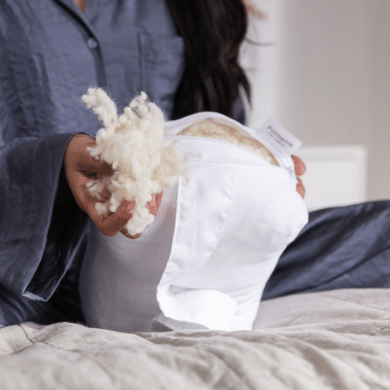
- Oreillers rafraîchissants pour couples : Investissez dans des oreillers conçus pour la circulation de l'air. Putnams propose des oreillers spécialisés qui utilisent des structures en mousse respirante et des housses au toucher frais. Un oreiller qui reste frais réduit le besoin de le retourner constamment du « côté froid », minimisant les mouvements qui pourraient réveiller votre partenaire.
- Oreillers compensés : Pour les partenaires qui ronflent (souvent un effet secondaire de la congestion ou de la position de sommeil), un oreiller compensé peut fournir une élévation. Cela aide non seulement à la circulation de l'air et au reflux, mais peut également réduire la surface de contact physique avec le matelas, aidant le dormeur à rester plus frais.
Quand envisager des arrangements de sommeil séparés
Il existe une tendance croissante connue sous le nom de « divorce du sommeil », mais ne vous laissez pas tromper par le nom agressif. Il s'agit simplement de couples dormant dans des lits ou des pièces séparés pour privilégier le repos.
Si les besoins en température d'un partenaire sont extrêmes, peut-être en raison d'une condition médicale ou de sueurs nocturnes sévères, et que les solutions de température de sommeil des couples comme la literie rafraîchissante ne fonctionnent pas, dormir séparément pourrait être l'option la plus saine pour la relation.
Un couple bien reposé est généralement un couple plus heureux et plus patient.
Cependant, avant de déménager dans la chambre d'amis, essayez l'approche « séparés mais ensemble ». Rapprochez deux lits simples (un lit king-size divisé). Cela minimise le transfert de mouvement et permet des matelas et des arrangements de literie complètement différents tout en vous gardant physiquement proches.
Voir aussi - Le mouvement du divorce du sommeil
Trouver votre harmonie thermique
Gérer pourquoi les partenaires dorment à des températures différentes demande de la patience et une volonté d'expérimenter. En reconnaissant que ces différences sont biologiques, et non comportementales, vous supprimez le blâme de la situation.
Commencez par les bases : passez aux fibres naturelles respirantes comme la laine, envisagez la méthode de la couette scandinave et explorez les accessoires de soutien et rafraîchissants comme ceux de Putnams pour faciliter la circulation de l'air.
Votre objectif est un sanctuaire reposant où vous et votre partenaire pourrez vous ressourcer, vous assurant de vous réveiller prêts à affronter vos journées chargées ensemble, rafraîchis, dynamisés et confortables.
À la recherche d'un rythme de sommeil harmonieux ? Découvrez notre gamme de confort de sommeil.
FAQ
Quelle est la règle des 7 7 7 pour les couples ?
La règle des 7 7 7 encourage les couples à passer du temps intentionnel ensemble en dédiant 7 minutes le matin, 7 minutes le soir et 7 heures à une activité significative une fois par mois. Cette pratique aide les couples à entretenir leur connexion malgré des emplois du temps chargés.
Quelle est la règle des 10 3 2 1 pour le sommeil ?
Cette règle offre une approche pratique pour améliorer l'hygiène et la qualité du sommeil :
- 10 heures avant de vous coucher, évitez la caféine pour ne pas perturber votre sommeil.
- 3 heures avant de vous coucher, terminez de manger des repas lourds pour faciliter la digestion.
- 2 heures avant de vous coucher, éloignez-vous du travail ou des tâches stimulantes pour détendre votre esprit.
- 1 heure avant de vous coucher, éteignez les écrans et concentrez-vous sur des activités apaisantes comme la lecture ou la méditation.
Est-il normal que les couples se couchent à des heures différentes ?
Oui, il est parfaitement normal que les couples aient des horaires de sommeil différents, surtout si leurs horaires de travail ou leurs rythmes de sommeil naturels varient. La clé est de maintenir un sentiment de connexion grâce à des routines comme les discussions matinales, les rituels du coucher ou le partage de petits moments d'intimité avant que l'un des partenaires ne se couche.
Quelle est la règle des 2 2 2 pour les couples ?
La règle des 2 2 2 priorise le temps passé ensemble en planifiant des moments pour se reconnecter de manière significative, tels que :
- Sortir en rendez-vous amoureux toutes les 2 semaines.
- Profiter d'un week-end d'évasion tous les 2 mois.
-
Prendre une semaine de vacances tous les 2 ans.
Cette structure offre aux couples occupés un cadre solide pour rester connectés et entretenir leur relation.


Du blog
Voir toutes




Laissez un commentaire