

Why Some People Always Feel Cold at Night: The Science of Sleep Temperature and How to Stay Warm
Quick Answer: Feeling always cold at night usually comes down to your body's natural pre-sleep temperature drop, combined with poor circulation and bedding that can't trap heat. Understanding sleep temperature regulation, and switching to insulating materials like British wool, helps most people stay warm from lights-off until morning.
If you've ever climbed into bed under three blankets and still woken up shivering at 3 am, you're not imagining it. Millions of adults quietly deal with cold-at-night sleep issues, regardless of how high they turn the thermostat. For some, it's a fleeting annoyance. For others, particularly older adults with reduced circulation, it's a nightly battle that leaves them exhausted the next day.
The good news is that this isn't simply bad luck.
There's a well-documented physiological reason why 'why am I cold when sleeping?' is one of the most searched sleep questions online, and understanding it is the first step towards actually fixing it.
Why Does Body Temperature Drop Before Sleep?
Your body runs on an internal clock managed by the suprachiasmatic nucleus in the brain. As bedtime approaches, core body temperature begins falling, a process that typically starts around two hours before you usually nod off. This decline signals the brain to release melatonin and ease you into deep sleep.
Sleep scientists have been tracking this for decades. Murphy and Campbell found that a rapid decline in core body temperature increases the likelihood of sleep onset and may support entry into deeper sleep stages. Campbell and Broughton described this phenomenon as "fluffing the physiological pillow"; sleep is most likely when body temperature is falling at its steepest rate.
To shed this internal heat, the body undergoes vasodilation: blood vessels in the hands and feet widen, allowing warmth to escape into the surrounding air. It's a clever system, but it only works properly if your bedding and room conditions cooperate.
For most sleepers, this is a normal, healthy process. But in people with slower metabolisms, leaner body mass, or reduced peripheral circulation, the drop can overshoot comfortable limits, triggering sudden chills rather than a gentle cool-down. This is often why 'why do I always feel cold in bed?' becomes a recurring frustration rather than a one-off bad night.
How Do Circulation and Bedding Materials Affect Warmth?
Once your body has redirected blood flow to your extremities, that warmth needs somewhere to go, and somewhere to stay. This is where circulation and bedding choice both come into play.
Circulation differences
If your circulatory system struggles to pump warm blood efficiently to your hands and feet, you'll feel the cold more intensely, regardless of room temperature.
This is heavily influenced by age, activity levels, and nutrition. Research into skin temperature and sleep from Raymann, Swaab and van Someren (2007, Physiology & Behaviour) found that elderly participants show an attenuated rise in foot temperature after lights-off, losing some of the natural link between pre-sleep warming and falling asleep easily. The researchers also noted that artificially warming the skin to replicate this natural process can enhance sleep propensity, a useful insight for anyone managing insulating bedding cold sleepers need to stay comfortable.
Raynaud's phenomenon, which affects an estimated 1 in 6 people according to Scleroderma & Raynaud's UK, can intensify this further by causing blood vessels in the hands and feet to constrict suddenly.
Bedding materials
Not all bedding performs equally. Here's a quick breakdown of common causes behind always cold at night complaints, and what actually helps:
|
What's happening |
Why it causes cold |
What helps |
|---|---|---|
|
Thin or synthetic duvets |
Polyester and microfibre fillings trap sweat instead of absorbing it, triggering evaporative cooling |
Natural, breathable fillings like British wool |
|
No barrier under the body |
Mattresses act as heat sinks, drawing warmth away all night |
A wool mattress topper creates a thermal barrier |
|
Poor circulation |
Warm blood struggles to reach hands and feet |
Layering, warming extremities before bed |
|
Draughty bedroom gaps |
Cold air seeps in as you shift position overnight |
Well-fitted, snug bedding with no gaps |
|
Too many heavy layers |
Trapped sweat dampens insulation, leaving you colder later |
Breathable natural fibres that wick moisture |
Synthetic fibres lack the structural loft and microscopic crimp needed to create the stable pockets of warm air that trap body heat. Natural fibres such as wool, by contrast, can absorb up to 30% of their own weight in moisture vapour without feeling damp, helping prevent that clammy, evaporative chill.
What Insulating Support Keeps You Warm All Night?
If you're searching for the best bedding for cold sleepers, the answer usually isn't more blankets; it's the right ones.
A popular ultralight backpacking video, I Slept Cold for Years… Until I Learned This (Your Trail Buddy, 2026), makes a surprisingly relevant point for anyone sleeping indoors too: the layer beneath you accounts for at least half your overall warmth, because insulation compresses under body weight and loses its effectiveness.
A warm duvet on top of a cold, unsupported mattress still results in a cold night. The same "sleep system" thinking applies to your bed at home; both what's underneath you and what's on top matter.

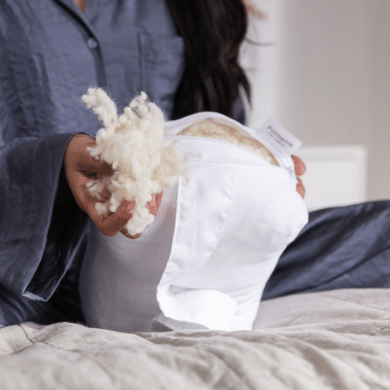
Wool mattress toppers address the underneath problem directly. Putnams' Natural 100% British Wool Mattress Topper uses 600gsm quilted British wool beneath a 100% cotton OEKO-TEX cover, creating a breathable barrier between you and a mattress that would otherwise draw heat away all night. It's naturally temperature-regulating and moisture-wicking, and comes with a two-year guarantee.
On top, a genuine wool duvet warmth advantage comes from how wool fibres actively regulate temperature rather than simply trapping heat like synthetic alternatives. Putnams' Winter British Wool Duvet & 100% Cotton is filled with 100% responsibly sourced, traceable British wool at 600gsm, rated 11–14 tog for autumn, winter and spring use.
|
Product |
Fill weight |
Tog rating |
|
Best for |
|---|---|---|---|---|
|
Winter British Wool Duvet (Single) |
600gsm |
11–14 tog |
|
Cold sleepers, autumn–spring |
|
Winter British Wool Duvet (King) |
600gsm |
11–14 tog |
Couples, larger beds |
|
|
Summer Lightweight British Wool Duvet |
- |
4–7 tog |
|
Hot sleepers, seasonal swap |
|
British Wool Mattress Topper (Double) |
600gsm |
- |
Extra Insulation underneath |
For sleepers who also feel the cold through their shoulders and neck, our wider pillow range offers similarly breathable, temperature-regulating fillings worth considering as part of the same sleep system.
How to stay warm at night naturally, in short, means thinking about your whole bed, not just adding another blanket on top. A stable, breathable sleep system beats improvised layering every time.
Take Control of Your Nighttime Comfort
Feeling cold in bed isn't a personal failing or something to simply put up with.
It's a predictable result of your body's natural temperature rhythm meeting bedding that isn't built to support it. By choosing insulating, breathable materials, particularly British wool, you work with your body's cooling process instead of fighting it.
If cold hands and feet are accompanied by numbness, colour changes, or persist despite better bedding, it's worth speaking to your GP, as this can occasionally point to an underlying circulatory issue. For everyone else, a well-chosen wool duvet and mattress topper can be the difference between restless nights and genuinely restorative sleep.
Frequently Asked Questions
Why am I always cold at night even with the heating on?
Central heating warms the room, but it doesn't address what's happening directly against your skin. If your duvet or mattress can't trap and regulate heat effectively, you'll still feel cold even in a warm room.
Does age affect how cold you feel at night?
Yes. Older adults often experience reduced peripheral circulation and diminished thermal sensitivity, making it harder to recognise and reach a comfortable sleep temperature.
Is a wool duvet actually warmer than a synthetic one?
Wool regulates temperature rather than just trapping heat, wicking moisture away to prevent the clammy evaporative cooling common with synthetic fillings. This makes wool duvets a popular choice for consistent sleep temperature regulation.
What tog rating should cold sleepers choose?
For autumn through spring, an 11-14 tog wool duvet suits most cold sleepers in UK homes. Hot sleepers or summer months call for a lighter 4-7 tog option instead.
When should I see a doctor about feeling cold at night?
If cold extremities are accompanied by numbness, skin colour changes, or persist despite improved bedding and a warm room, consult your GP to rule out circulatory or thyroid-related causes.


Du blog
Voir toutes




Laissez un commentaire