

Les masques de sommeil intelligents peuvent-ils vous aider à vous endormir plus vite ? Exploration des dernières technologies portables pour le sommeil.
Réponse rapide : Les masques de sommeil intelligents combinent une technologie occultante éprouvée avec des capteurs EEG, un guidage audio, une luminothérapie circadienne et des vibrations haptiques biométriques pour réduire activement le temps d'endormissement. Les données cliniques montrent que les utilisateurs peuvent s'endormir plus rapidement, gagner jusqu'à 27 minutes de sommeil supplémentaires par nuit et constater des améliorations mesurables des phases de sommeil profond et paradoxal, bien que le confort physique et le soutien de la colonne vertébrale restent la base essentielle d'un repos de qualité.
Environ 30,5 % des adultes dorment moins de sept heures par nuit, selon les données des Centres de contrôle et de prévention des maladies (CDC). Rien qu'au Royaume-Uni, le manque de sommeil coûte à l'économie environ 40 milliards de livres sterling par an en perte de productivité. Pendant des années, la réponse de l'industrie du bien-être à cette crise a été la surveillance passive, les montres intelligentes et les anneaux de fitness générant des graphiques détaillés qui confirmaient, plutôt que de résoudre, le problème.
Enregistrer une mauvaise nuit de sommeil après coup ne sert à rien quand votre esprit est en pleine effervescence à 1h00 du matin.
C'est précisément cet écart entre la prise de conscience et l'intervention qui est comblé par une nouvelle catégorie de technologies de sommeil portables. Le marché mondial des masques de sommeil intelligents a atteint 19,6 millions de dollars US en 2026 et devrait atteindre 19,6 millions de dollars US d'ici 2030, avec un TCAC de 5,1 % (Growth Market Analyst Reports, 2025). Ces appareils sont conçus non seulement pour suivre le sommeil, mais aussi pour le modeler activement, en utilisant la lumière, le son, les vibrations et la neurostimulation pour guider votre cerveau de l'éveil vers un repos profond et réparateur.
Alors, les masques de sommeil intelligents vous aident-ils vraiment à vous endormir plus vite ? Et comment se comparent-ils aux fondements d'un environnement de sommeil véritablement confortable ?
Qu'est-ce qu'un masque de sommeil intelligent ?
Un masque de sommeil intelligent est un appareil portable porté sur les yeux pendant le sommeil. Contrairement à un masque de sommeil occultant standard, qui bloque simplement la lumière, un masque de sommeil intelligent intègre une ou plusieurs technologies actives pour influencer votre état de sommeil en temps réel.
La plupart des masques de sommeil intelligents combinent les éléments suivants :
- Capteurs EEG ou fNIRS pour surveiller l'activité cérébrale et identifier les phases de sommeil
- Micro-LED intégrées pour la luminothérapie circadienne et le réveil simulé au lever du soleil
- Moteurs à vibration haptique qui répondent à votre rythme cardiaque et à vos données biométriques
- Haut-parleurs ultra-minces intégrés pour un guidage audio, des paysages sonores ou des battements binauraux
- Connectivité avec une application complémentaire pour les données sur les phases de sommeil et des recommandations personnalisées
Ils s'inscrivent dans une catégorie plus large et en forte croissance. Selon Towards Healthcare (2026), le marché des traqueurs de sommeil portables est évalué à 18,31 milliards de dollars US et devrait atteindre 46,24 milliards de dollars US d'ici 2035, porté par la demande croissante des consommateurs pour une optimisation de la santé basée sur les données.
Voir aussi - Les réveils à simulation d'aube peuvent-ils améliorer votre cycle de sommeil ? Une meilleure façon de se réveiller ?
Comment la technologie de sommeil portable évolue
La science de la lumière et du sommeil est bien établie depuis des décennies.
L'exposition à la lumière artificielle la nuit supprime la mélatonine, l'hormone qui signale à votre cerveau qu'il est temps de dormir, en inhibant le rythme circadien du corps. Comme l'explique le Dr Wendy Troxel, chercheuse principale en sciences comportementales à la RAND Corporation : « La lumière, surtout la nuit, peut perturber notre horloge biologique interne qui aide à réguler nos cycles veille-sommeil. »
Les masques de sommeil occultants standards y répondent directement. Une étude évaluée par des pairs et publiée dans la revue Sleep (Greco et al., Cardiff University, 2022) a révélé que les participants qui portaient un masque pour les yeux chaque nuit pendant une semaine ont démontré une meilleure encodage de la mémoire épisodique et des temps de réaction significativement plus rapides le lendemain, par rapport à ceux qui dormaient sans. Il est crucial de noter que l'amélioration de la mémoire était corrélée à une augmentation du temps passé en sommeil à ondes lentes (SOL), la phase la plus profonde et la plus réparatrice du cycle de sommeil. Les données réelles de WHOOP le confirment : les membres de WHOOP qui portaient un masque de sommeil ont gagné en moyenne 27 minutes de sommeil supplémentaires par nuit, une augmentation de 2 % du sommeil paradoxal et une amélioration de 9 % des scores de récupération le lendemain.
Les masques de sommeil intelligents s'appuient sur cette base biologique en ajoutant des couches d'intervention active.
|
Caractéristique |
Masque occultant standard |
Masque de sommeil intelligent |
|---|---|---|
|
Blocage de la lumière |
✅ Total |
✅ Total (coques oculaires 3D profilées) |
|
Suivi des phases de sommeil |
❌ Aucun |
✅ Capteurs EEG / fNIRS |
|
Audio guidé / paysages sonores |
❌ Aucun |
✅ Haut-parleurs intégrés |
|
Luminothérapie circadienne |
❌ Aucune |
✅ Réveil à simulation d'aube par micro-LED |
|
Vibration haptique |
❌ Aucune |
✅ Vibration basée sur des données biométriques |
|
Connectivité de l'application |
❌ Aucune |
✅ Données en temps réel et coaching |
|
Gamme de prix |
5-40 £ |
300-450 £+ |
Les masques de sommeil intelligents améliorent-ils réellement le sommeil ?
La réponse honnête est : pour beaucoup de gens, oui, et les preuves sont de plus en plus solides.
Un essai clinique mené par SleepScore Labs évaluant les masques de sommeil intelligents a analysé 2 851 nuits de données de sommeil auprès de participants signalant des difficultés à s'endormir ou à rester endormis. Les principales conclusions incluent :
- 7 % d'amélioration de la latence du sommeil (temps nécessaire pour s'endormir) nuit après nuit
- 3 minutes de sommeil profond à ondes lentes supplémentaires par nuit, soit 90 minutes de sommeil profond supplémentaires par mois
- 33 % d'amélioration de l'agitation perçue
- 18 % d'augmentation de la capacité à dormir toute la nuit sans se réveiller
- 21 % d'augmentation de la relaxation auto-évaluée lors de l'utilisation de la thérapie par vibration biométrique avant le sommeil
Le masque de sommeil intelligent Bía, qui utilise le suivi cérébral par spectroscopie fonctionnelle proche infrarouge (fNIRS), a été évalué à 8,6/10 par l'équipe de test de la Sleep Foundation en 2026 et a reçu le prix « Meilleur suivi polyvalent », salué pour sa capacité d'occultation à 100 %, ses paysages sonores relaxants et sa fonction de réveil simulé à l'aube.
Le Muse S Athena, qui utilise à la fois la technologie EEG et fNIRS, a été évalué à 8,7/10 par la même équipe et offre une rétroaction en temps réel de l'activité cérébrale ainsi qu'une méditation guidée.
Des études évaluées par des pairs sur des bandeaux de neurostimulation en boucle fermée publiées dans Frontiers in Human Neuroscience ont également montré qu'une stimulation transcrânienne ciblée peut réduire le temps nécessaire pour atteindre le sommeil profond de plus de 50 % chez les populations non cliniques.
Voir aussi - Les couvertures lestées pour le sommeil : Réduisent-elles vraiment l'anxiété et améliorent-elles le repos ?
Quelles sont les fonctionnalités d'un masque de sommeil intelligent qui valent la peine d'être payées ?
Toutes les fonctionnalités n'offrent pas la même valeur. Voici un aperçu de ce que les preuves soutiennent réellement :
Capacité d'occultation (grande valeur)
L'avantage fondamental, et le mieux étudié. L'élimination totale de la lumière protège la production de mélatonine, augmente le sommeil à ondes lentes et améliore la vigilance et la mémoire le lendemain (Greco et al., 2022). Même le masque occultant le plus simple offre cela.
Audio guidé et paysages sonores (valeur modérée à élevée)
L'audio intégré aide à calmer un esprit agité. Ceci est particulièrement utile pour les personnes dont le principal obstacle au sommeil est l'anxiété plutôt que la lumière. Le masque de sommeil intelligent Bía comprend des paysages sonores conçus pour se synchroniser avec votre état de sommeil.
Thérapie lumineuse circadienne / simulateur de lever de soleil (valeur modérée)
Des recherches de l'Université de Stanford (Zeitzer et al.) suggèrent que des impulsions lumineuses précisément chronométrées peuvent modifier l'horloge biologique plus efficacement qu'une exposition continue à la lumière. Les alarmes de lever de soleil simulées suppriment doucement la mélatonine et augmentent le cortisol, produisant un réveil plus naturel et moins groggy.
Thérapie par vibrations haptiques (valeur émergente)
Les vibrations biométriques aident à déclencher le système nerveux parasympathique, ralentissant la fréquence cardiaque et faisant sortir le corps d'un état de "lutte ou de fuite". Les données cliniques des essais de Therabody montrent des améliorations mesurables de la relaxation et de l'endormissement.
Stadification du sommeil par EEG (utile pour les curieux des données)
Le suivi précis des stades de sommeil permet des recommandations personnalisées au fil du temps. Cependant, l'EEG portable a des limites par rapport à la polysomnographie clinique, et les données sont plus précieuses lorsqu'elles sont utilisées pour identifier des tendances plutôt que pour s'obséder sur les scores nocturnes.

Pourquoi le confort physique a-t-il toujours le plus grand impact sur la qualité du sommeil ?
Voici la partie que le marketing de la technologie du sommeil intelligent ignore souvent : aucun appareil portable ne peut compenser un environnement de sommeil inconfortable.
Si votre cou est tendu, votre colonne vertébrale est désalignée ou si vous vous réveillez à plusieurs reprises à cause de points de pression, la luminothérapie circadienne ne résoudra pas cela. Le confort physique, en particulier un bon alignement de la colonne vertébrale et un soulagement efficace de la pression, reste la base sur laquelle toute autre amélioration du sommeil est construite.
C'est là que le bon oreiller devient aussi important que n'importe quel gadget. Un oreiller de soutien de qualité maintient la tête et le cou dans une position neutre, protège le sommeil à ondes lentes en minimisant les mouvements et réduit la tension musculaire qui empêche votre système nerveux de se détendre complètement.
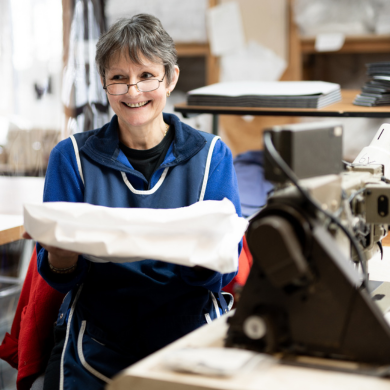
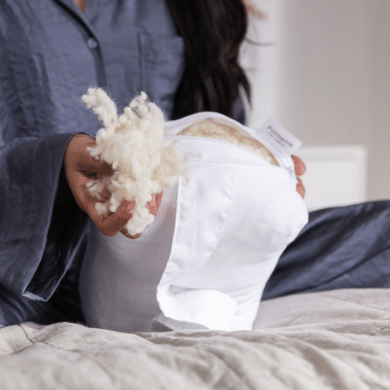
La gamme d'oreillers de soutien pour le sommeil fabriqués à la main par Putnams, fabriqués dans le Devon depuis 1979, est conçue précisément à cet effet. L'oreiller Putnam offre un soutien orthopédique du cou et des épaules qui maintient votre colonne vertébrale alignée tout au long de la nuit. Pour ceux qui dorment sur le dos ou sur le côté et qui ont besoin d'une sensation plus adaptable, l'oreiller en balles de sarrasin biologiques épouse naturellement la forme de votre tête et de votre cou, offrant un soutien ferme et ajustable sans surchauffe. L'oreiller Papillon est un coussin de cou polyvalent de style japonais qui convient au sommeil, aux voyages et au repos diurne.
Pour les personnes souffrant de reflux acide, de ronflements ou de difficultés respiratoires qui fragmentent le sommeil, le cale de lit Putnams élève le haut du torse pour garder les voies respiratoires ouvertes et réduire les perturbations nocturnes, une solution structurelle qu'aucun masque de sommeil, aussi avancé soit-il, ne peut reproduire.
L'approche la plus efficace combine les deux : une surface de sommeil de soutien et bien adaptée, associée à l'environnement sensoriel que peuvent offrir la technologie du sommeil intelligent et les masques de sommeil occultants.
Voir aussi - Le bruit blanc aide-t-il à dormir ? Examen des preuves derrière les sons du sommeil
Qui tire le plus de bénéfices d'un masque de sommeil intelligent ?
Les masques de sommeil intelligents ne sont pas une solution universelle, mais ils offrent un avantage disproportionné à des groupes spécifiques :
- Les voyageurs fréquents qui sont confrontés à la pollution lumineuse dans les chambres d'hôtel et aux perturbations circadiennes à travers les fuseaux horaires
- Les travailleurs postés qui doivent dormir pendant la journée
- Les personnes anxieuses ayant des troubles du sommeil dont les pensées agitées sont le principal obstacle à l'endormissement
- Les citadins exposés à l'éclairage public persistant et à la lumière artificielle ambiante
- Les optimiseurs de sommeil qui veulent des données granulaires pour améliorer leur récupération et leurs performances
Si vous souffrez d'apnée obstructive du sommeil, d'insomnie chronique ou d'autres troubles cliniques du sommeil, la technologie du sommeil intelligente doit être utilisée en complément d'un avis médical professionnel, et non en remplacement.
Un masque de sommeil intelligent vaut-il la peine d'être acheté pour un meilleur sommeil ?
La réponse courte est oui, si les fonctionnalités d'occultation, audio et de luminothérapie répondent à vos obstacles spécifiques au sommeil, et que vous investissez en complément (et non en remplacement) d'un environnement de sommeil physique de qualité.
La réponse longue nécessite de peser votre situation par rapport aux preuves :
- Choisissez un masque de sommeil occultant de base si la perturbation lumineuse est votre seul problème, les avantages cognitifs et de vigilance sont bien documentés, et le coût est minime.
- Choisissez un masque de sommeil intelligent si vous avez des difficultés à vous endormir, un esprit actif, ou des perturbations circadiennes dues au travail de nuit ou aux voyages fréquents, et que vous souhaitez un appareil qui soutient activement la transition de votre corps vers le sommeil.
- Priorisez d'abord votre oreiller et votre surface de sommeil si vous vous réveillez régulièrement avec des douleurs cervicales, des douleurs dorsales, ou si vous vous repositionnez tout au long de la nuit.
Un sommeil de qualité est rarement un problème à variable unique.
Les dormeurs les plus efficaces ont tendance à le considérer comme un environnement, la lumière, le son, la température, le soutien et la routine fonctionnant tous ensemble.
Questions fréquemment posées
Les masques de sommeil intelligents aident-ils réellement à s'endormir plus vite ?
Oui, pour de nombreux utilisateurs. Les données cliniques de SleepScore Labs (essai du masque de sommeil Therabody, 2 851 nuits) ont montré une amélioration de 7 % de la latence d'endormissement nuit après nuit. La combinaison du blocage de la lumière, de la vibration haptique biométrique et de l'audio guidé agit directement sur l'éveil du système nerveux qui retarde le sommeil.
Quelle est la différence entre un masque de sommeil intelligent et un masque de sommeil occultant standard ?
Un masque de sommeil occultant standard bloque la lumière ambiante, protégeant la production de mélatonine et améliorant le sommeil à ondes lentes. Un masque de sommeil intelligent fait cela et ajoute des fonctionnalités actives, un suivi cérébral par EEG ou fNIRS, des vibrations biométriques, une luminothérapie circadienne et un audio guidé, pour réduire activement la latence d'endormissement et améliorer l'architecture du sommeil.
Est-il sûr de porter des masques de sommeil intelligents toutes les nuits ?
Oui. Les masques de sommeil portables sont des dispositifs non invasifs qui sont sûrs pour une utilisation nocturne. Comme pour tout dispositif portable, le confort et l'hygiène sont les principales considérations ; choisissez un matériau respirant, assurez-vous que la sangle n'est pas trop serrée et nettoyez le masque régulièrement.
Quel est le meilleur masque de sommeil intelligent pour un meilleur sommeil en 2026 ?
Le masque de sommeil intelligent Bía a été évalué à 8,6/10 par la Sleep Foundation en 2026 et a été récompensé comme "Meilleur suivi polyvalent" pour sa combinaison de surveillance de l'activité cérébrale fNIRS, de capacité d'occultation à 100 %, de paysages sonores relaxants et d'alarme de lever de soleil simulée. Le Muse S Athena (évalué à 8,7/10) est la meilleure option pour les utilisateurs qui souhaitent des données EEG et fNIRS détaillées en temps réel, accompagnées d'une méditation guidée.
Un masque de sommeil intelligent peut-il remplacer un bon oreiller ?
Non. Un masque de sommeil intelligent agit sur les entrées sensorielles, la lumière, le son et les vibrations. Il ne peut pas corriger un désalignement de la colonne vertébrale, réduire les points de pression ou soulager les douleurs au cou et au dos. Un oreiller de soutien de qualité reste la base physique d'un sommeil réparateur. Les deux fonctionnent mieux en combinaison.
Qui ne devrait pas utiliser un masque de sommeil intelligent ?
Les masques de sommeil intelligents ne sont pas un traitement principal pour les troubles cliniques du sommeil tels que l'apnée obstructive du sommeil, l'insomnie sévère ou d'autres affections médicales diagnostiquées. Toute personne ayant des problèmes de sommeil graves ou persistants doit consulter un professionnel de la santé avant de se fier à la technologie portable.
Commencez par la Fondation, puis ajoutez la Technologie
Les masques de sommeil intelligents représentent une réelle avancée dans la technologie du sommeil accessible, faisant passer le marché du suivi passif à l'intervention active en temps réel. Les preuves étayent leur capacité à réduire la latence d'endormissement, à protéger le sommeil réparateur à ondes lentes et à améliorer la vigilance et la récupération le lendemain.
Mais les meilleurs résultats sont obtenus lorsque la technologie fonctionne en complément, et non en remplacement, d'un environnement de sommeil correctement soutenu. Si vous vous réveillez avec des douleurs cervicales, si vous êtes agité toute la nuit ou si vous avez des problèmes structurels comme le reflux ou les ronflements, aucun appareil ne réparera ce que seul un soutien physique peut résoudre.
Chez Putnams, nous concevons et fabriquons à la main des produits de confort dans le Devon depuis 1979, avec plus de 500 000 clients et plus de 8 600 avis vérifiés. Parcourez la gamme d'oreillers Putnams pour trouver le soutien adapté à votre position de sommeil et à vos besoins, et construisez la base sur laquelle la technologie du sommeil portable pourra ensuite s'appuyer.


Du blog
Voir toutes


Laissez un commentaire